
Finding the Cause of a Cough That Won’t Go Away
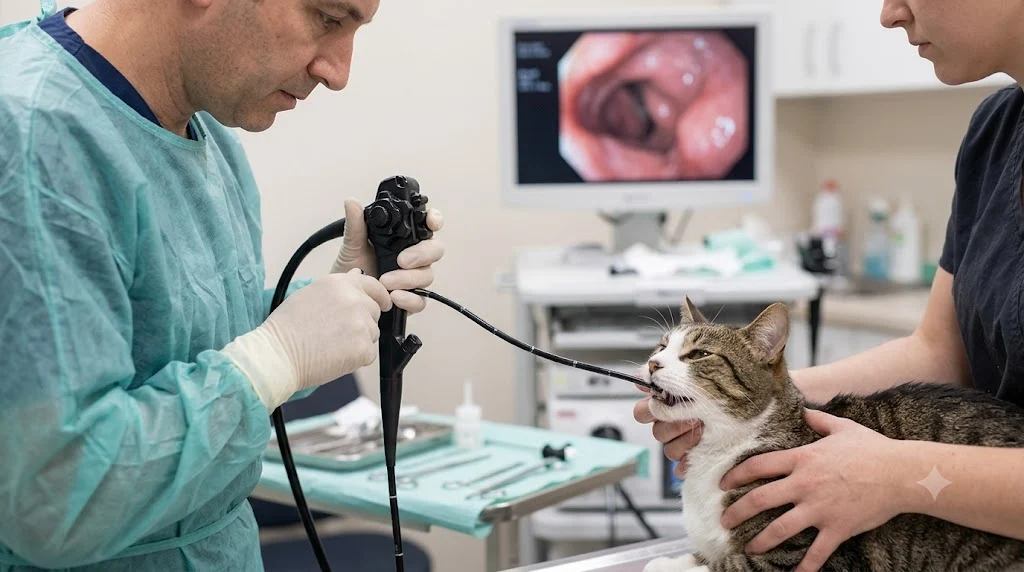
When a dog or cat keeps coughing, wheezing or struggling to breathe despite treatment, the answer is often inside the airways. At West Texas Veterinary Specialist in Lubbock, TX, our board-certified internal medicine specialist uses tracheobronchoscopy to look directly at the windpipe and lower airways, collect targeted samples and, when possible, remove inhaled foreign material without surgery.
Book OnlineWhat Is Tracheobronchoscopy?
Tracheobronchoscopy is a minimally invasive procedure that lets our specialist examine the trachea (windpipe) and bronchi (the major airways leading into the lungs) using a thin, flexible video endoscope. The scope passes through the mouth and down the airway while your pet is under general anesthesia, sending a magnified, real-time image to a monitor. No incisions are needed.
X-rays and CT scans show the shape of the chest and lungs, but they can’t show the color, texture or movement of the airway lining. Tracheobronchoscopy fills that gap. It lets us see inflammation, excess mucus, narrowing, masses and foreign objects directly, and it gives us the samples needed to confirm a diagnosis instead of guessing at one. It is one of the advanced procedures offered through our veterinary internal medicine services.
Signs Your Pet May Need an Airway Exam
Your primary care veterinarian may recommend a referral for tracheobronchoscopy if your pet has:
- A chronic cough lasting several weeks or longer
- A honking or goose-like cough, often seen with tracheal collapse in small breed dogs
- Wheezing, noisy breathing or labored breathing
- A cough that returns after antibiotics or anti-inflammatory medication are stopped
- Coughing up blood or blood-tinged mucus
- Sudden, violent coughing after time outdoors, which can point to an inhaled grass awn or plant material
- Exercise intolerance or tiring quickly on walks
- Abnormal findings on chest X-rays or CT that need a closer look
Cats with suspected feline asthma or chronic bronchitis also benefit from airway evaluation, since sampling helps separate allergic airway disease from infection, parasites or other causes.
Conditions Tracheobronchoscopy Can Help Diagnose
- Tracheal and bronchial collapse
- Chronic bronchitis in dogs and cats
- Feline asthma and other inflammatory airway disease
- Eosinophilic bronchopneumopathy
- Bacterial, fungal or parasitic airway infections
- Inhaled foreign bodies such as grass awns, seeds or plant fragments
- Airway masses, polyps or tumors
- Bronchiectasis and airway narrowing or strictures
- Laryngeal abnormalities, which are often evaluated at the same time
Samples Collected During the Procedure
Seeing the airway is only part of the value. During the same anesthetic episode, our specialist can collect:
- Bronchoalveolar lavage (BAL): a small amount of sterile fluid is washed into a targeted section of lung and retrieved for cytology and culture.
- Airway brushings: cells gathered from the airway surface to look for infection or abnormal cells.
- Biopsies: small tissue samples from masses or abnormal areas for pathology.
- Cultures: to identify bacteria or fungi and choose the most effective medication.
These results guide treatment decisions far more precisely than trial-and-error therapy, which can save time, money and frustration for families whose pets have been coughing for months.
What to Expect Before, During and After
Before the procedure, we review your pet’s history, prior imaging and lab work from your family veterinarian. Bloodwork and chest X-rays are typically needed to make sure your pet is a safe candidate for anesthesia. Your pet will need to fast beforehand, and we’ll give you specific instructions ahead of time.
During tracheobronchoscopy, your pet is under general anesthesia and closely monitored throughout. Because the scope shares the airway, our team pays careful attention to oxygen levels and breathing. Most airway exams are completed in well under an hour, depending on what is found and how many samples are collected.
Afterward, most pets go home the same day. A mild cough or slightly hoarse bark for a day or two is common. Results from cytology, cultures and biopsies usually return over several days, and we share findings and a treatment plan with both you and your primary veterinarian. Learn more about the visit process on our what to expect page.
For Referring Veterinarians
Tracheobronchoscopy pairs well with other diagnostics we offer, including rhinoscopy for patients with combined nasal and lower airway signs. Please send recent thoracic radiographs, bloodwork and treatment history with your referral so we can plan the procedure efficiently. You can start the process on our refer a patient page, and we keep you informed with detailed reports at every step.
Tracheobronchoscopy FAQs
Is tracheobronchoscopy painful for my pet?
No. Your pet is under general anesthesia for the entire procedure and feels nothing. There are no incisions. Some pets have a mild cough or sore throat for a day or two afterward, which usually resolves on its own.
Does my pet need a referral for tracheobronchoscopy?
Yes. West Texas Veterinary Specialist is a referral-based specialty practice, so your primary care veterinarian sends us your pet’s records and requests the procedure. If you think your pet could benefit, talk with your veterinarian about a referral to our internal medicine specialist.
How long does the procedure take?
Most airway exams take less than an hour, though time varies depending on what we find and how many samples are collected. Your pet will spend additional time preparing for anesthesia and recovering before going home.
Will my pet go home the same day?
Most pets go home the same day once they are fully awake and breathing comfortably. Pets with severe airway disease may need extra monitoring, and we’ll discuss that with you in advance if it’s likely.
Can tracheobronchoscopy remove something my dog inhaled?
Often, yes. Grass awns, seeds and other plant material can sometimes be grasped and removed through the scope, avoiding chest surgery. Whether removal is possible depends on the object’s size and location.
How is this different from a chest X-ray or CT scan?
X-rays and CT show the structure of the chest and lungs from the outside. Tracheobronchoscopy shows the inside surface of the airways directly and lets us collect fluid, cells and tissue samples. The tests complement each other, and imaging is usually done first.
When will we get results?
We can often share what we saw right after the procedure. Lab results from cytology, cultures and biopsies typically take several days, and we send a full report with treatment recommendations to you and your veterinarian.
Get Clear Answers About Your Pet’s Breathing
If your dog or cat has a persistent cough or breathing trouble, ask your veterinarian about a referral to West Texas Veterinary Specialist. Have questions about how specialty care works? Visit our Frequently Asked Questions or call us at .