
Answers and Relief When Fluid Builds Up in Your Pet’s Belly
At West Texas Veterinary Specialist, our board-certified internal medicine specialist performs ultrasound-guided abdominocentesis for dogs and cats referred from across Lubbock and West Texas. This minimally invasive procedure safely collects or removes fluid from the abdomen. It helps uncover the cause of abdominal swelling, discomfort or labored breathing, and it can bring quick relief when too much fluid has collected.
Book OnlineWhat Is Abdominocentesis?
Abdominocentesis, sometimes called an abdominal tap, uses a fine needle to draw fluid from the space around a pet’s abdominal organs. A healthy abdomen holds only a tiny amount of fluid. When fluid builds up, a condition known as ascites or abdominal effusion, it signals that something is wrong. Sampling that fluid is one of the fastest ways to find out what is causing it.
We perform every abdominocentesis with real-time ultrasound guidance. Imaging lets our specialist see exactly where the fluid pockets are and steer the needle away from organs and blood vessels. That makes the procedure more accurate and more comfortable for your pet. It is often paired with an abdominal ultrasound, so the fluid and the organs around it can be evaluated during the same visit.
Signs Your Pet May Need an Abdominal Tap
Your family veterinarian may recommend a referral for abdominocentesis if your pet shows signs such as:
- A swollen, rounded or pot-bellied abdomen
- Belly pain or reluctance to be picked up
- Rapid or labored breathing
- Lethargy, weakness or reduced appetite
- Fluid seen on X-rays or ultrasound at their clinic
- Unexplained weight gain alongside muscle loss
What to Expect During the Procedure
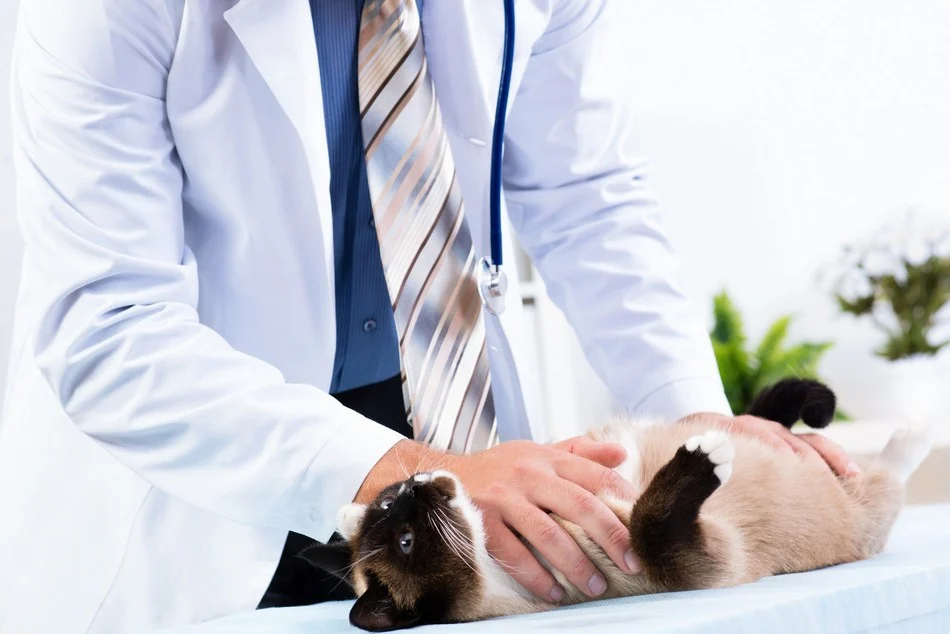
Your pet is gently positioned and kept comfortable while we clip and clean a small area on the belly. Using real-time ultrasound guidance, our specialist pinpoints the fluid and carefully inserts a needle to collect a sample. If a large volume has built up and is affecting your pet’s comfort or breathing, more fluid can be removed at the same time. Most pets stay calm throughout, and sedation is uncommonly needed.
Why the Fluid Sample Matters
Abdominal fluid gives us vital information about your pet’s health. Laboratory testing can show whether the fluid is related to infection, inflammation, liver disease, heart disease, low protein levels, internal bleeding, cancer or other conditions. Knowing the type of fluid helps narrow down the cause and guides the next steps in diagnosis and treatment. When excess fluid is removed, many pets also feel more comfortable and breathe more easily right away.
After the Procedure
The collected sample is submitted for diagnostic testing, and your veterinarian will review the results with you as soon as they are ready. Your veterinarian is always welcome to contact us to discuss the findings further. Most pets recover quickly and can return to normal activity soon after the visit. Keep an eye on the needle site for a day or two and let your veterinarian know if you notice swelling, leaking fluid or any change in your pet’s behavior.
Abdominocentesis FAQs
Is abdominocentesis painful for my pet?
Most pets tolerate it very well. The needle is small, and ultrasound guidance lets our specialist place it quickly and precisely. Many pets feel little more than a brief pinch, and sedation is uncommonly needed.
How long does the procedure take?
The tap itself usually takes only a few minutes. Preparation, ultrasound imaging and any additional fluid removal can add time, but most pets are finished well within a single visit.
Will my pet need to be sedated?
Usually not. Most dogs and cats stay calm with gentle handling. If a pet is very anxious or painful, our specialist may recommend light sedation to keep them safe and comfortable.
What can abdominal fluid testing reveal?
Testing can help identify infection, inflammation, liver or heart disease, low blood protein, internal bleeding, cancer and other causes of fluid buildup. The results help guide further diagnostics and treatment.
Can removing the fluid help my pet feel better?
Yes. When a large amount of fluid presses on the diaphragm and organs, removing some of it can ease discomfort and make breathing easier right away. The fluid may return if the underlying cause is not yet controlled.
Are there risks with abdominocentesis?
Complications are uncommon. Ultrasound guidance greatly reduces the chance of puncturing an organ or blood vessel. Mild bruising or a small amount of fluid leaking from the needle site can occur and usually resolves on its own.
How does my pet get an abdominocentesis appointment?
We work on a referral basis. Your family veterinarian can refer your pet to our specialist, and we will share the results and recommendations with them so your pet’s care stays coordinated.
Find the Cause of Your Pet’s Abdominal Swelling
If your pet has a swollen belly or fluid on imaging, ask your family veterinarian about a referral to West Texas Veterinary Specialist. Veterinarians can refer a patient online, and pet owners can visit our Frequently Asked Questions to learn how referrals, scheduling and specialty visits work. Call with any questions.