
Clearer Answers When the Specialist Reads the Scan in Real Time
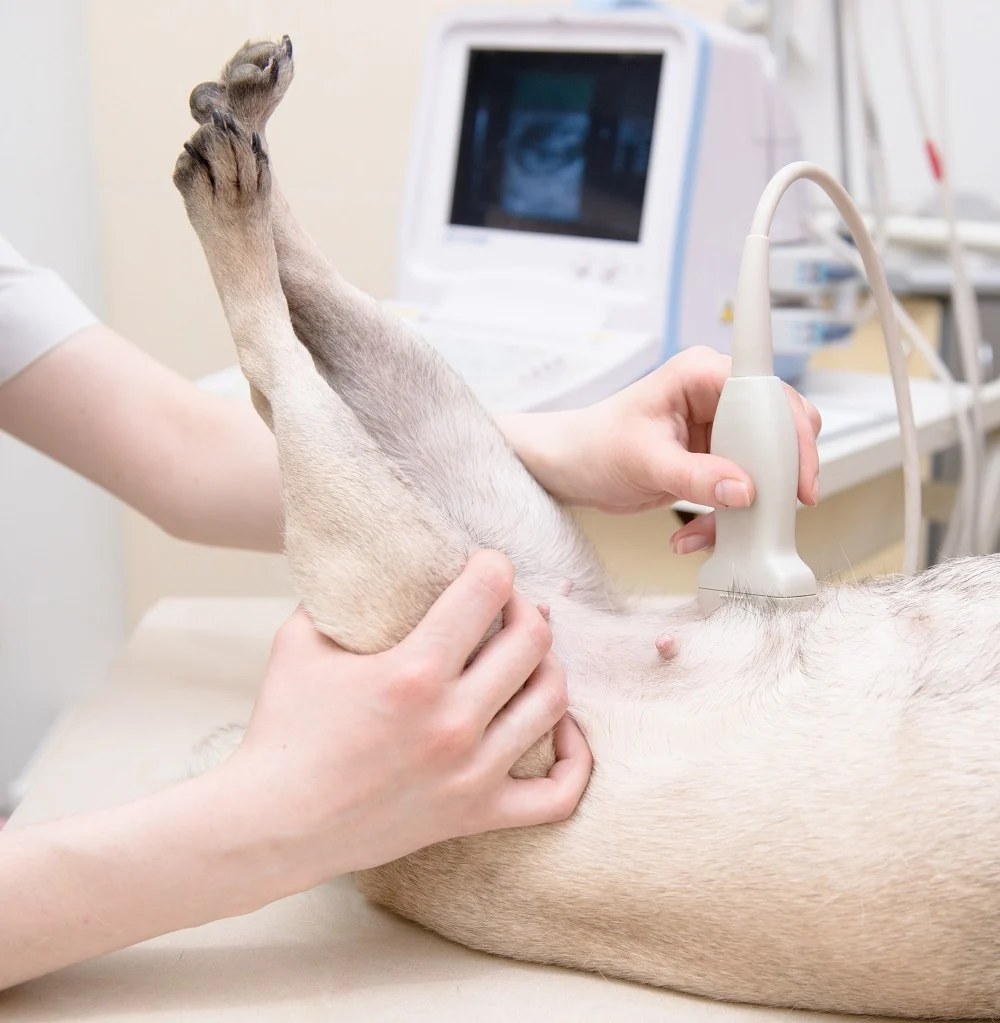
Abdominal ultrasonography is now widely available in veterinary medicine. The quality of the interpretation still depends on the training and experience of the person holding the probe. At West Texas Veterinary Specialist, our board-certified specialists perform and interpret every abdominal ultrasound for dogs and cats in Lubbock and across West Texas. They capture high-quality images and video and read them as the scan happens, so you and your family veterinarian get faster, more accurate answers.
Book OnlineWhy Specialist Interpretation Makes a Difference
Many imaging services only acquire the images and then send the scans to an outside specialist for interpretation. In those cases, the person reading the study never examines or interacts with the patient. That specialist has to rely only on the pictures that were submitted.
At West Texas Veterinary Specialist, the board-certified specialist doing the scan is the same person interpreting it. While the probe is still on your pet, the specialist can:
- Look more closely at an area of concern from several angles
- Check the findings against your pet’s history, lab work and physical exam
- Decide right away whether a fluid or tissue sample is needed
- Explain the findings clearly to your family veterinarian and to you
The result is board-certified expertise, real-time interpretation and direct specialist involvement in your pet’s care. This often means fewer repeat visits and a faster path to treatment.
What an Abdominal Ultrasound Evaluates
Ultrasound uses sound waves to create live images of the organs inside the abdomen. It does not use radiation. It shows the internal structure of organs in ways X-rays cannot. During the exam, our specialists evaluate:
- Liver and gallbladder
- Spleen
- Kidneys and adrenal glands
- Urinary bladder and prostate
- Stomach and intestines
- Pancreas
- Abdominal lymph nodes
- Free fluid, masses or other abnormalities in the abdomen
When Your Veterinarian May Recommend an Ultrasound
Your family veterinarian may refer your pet for an abdominal ultrasound if your pet has:
- Ongoing vomiting, diarrhea or weight loss
- Abnormal blood work, such as elevated liver or kidney values
- Changes in urination or blood in the urine
- A swollen or painful belly
- A mass felt on exam or seen on X-rays
- A cancer diagnosis that needs staging or monitoring
- Hormonal disease such as Cushing’s disease that needs a closer look
Ultrasound-Guided Sampling During the Same Visit
Our specialists are also skilled in ultrasound-guided procedures. When the scan shows something that needs a closer look, we can often collect a precise sample during the same visit. Learn more about ultrasound-guided fine needle aspirates, or about abdominocentesis when fluid has collected in the abdomen. Combining imaging and sampling saves time and helps your pet reach a diagnosis sooner.
What to Expect on Ultrasound Day
Most abdominal ultrasounds are quick and painless. We gently clip a small area of fur on the belly so the probe makes good contact with the skin. Then we apply a warm gel. Many pets lie calmly on a padded table and do not need sedation. Light sedation may be used for pets that are anxious or painful, or when a sample will be taken. Your veterinary team will let you know whether to withhold food beforehand, because a full stomach can make some organs harder to see.
For Referring Veterinarians
We work closely with family veterinarians throughout Lubbock and West Texas. After each study, you receive the specialist’s findings and recommendations, so you can stay at the center of your patient’s care. Visit our Refer a Patient page to get started. You can also find answers about referrals and scheduling on our Frequently Asked Questions page.
Abdominal Ultrasound FAQs
Does my pet need a referral for an abdominal ultrasound?
Yes. West Texas Veterinary Specialist is a specialty referral practice. Your family veterinarian refers your pet to us, and we share the results and recommendations with them afterward.
Is abdominal ultrasound painful for my pet?
No. Ultrasound is non-invasive and painless. Most pets tolerate it well. Light sedation is only used if a pet is anxious or uncomfortable, or if a sample needs to be collected.
Why does the fur on my pet’s belly need to be shaved?
Fur traps air, and air blocks sound waves. Clipping a small area lets the probe make good contact with the skin. This gives clearer images and a more accurate exam.
How long does an abdominal ultrasound take?
Most studies take about 30 to 45 minutes. A visit may take longer if an ultrasound-guided aspirate or biopsy is performed during the same visit.
What is the difference between ultrasound and X-rays?
X-rays show the size, shape and position of organs. Ultrasound shows their internal structure in real time. The two tests often complement each other, and your pet may benefit from both.
When will we get the results?
Because our board-certified specialists interpret the images while they scan, preliminary findings are usually available the same day. Results from any samples sent to the lab take a few additional days.
Can a biopsy or sample be taken during the ultrasound?
Often, yes. If the specialist finds a mass, an abnormal organ or fluid in the abdomen, an ultrasound-guided sample can usually be collected during the same visit.