
Clearer Answers When Neurologic Signs Point to the Brain or Spine
Seizures, neck pain, weakness or sudden changes in behavior can be frightening, and they are hard to diagnose from bloodwork alone. At West Texas Veterinary Specialist in Lubbock, TX, a board-certified internal medicine specialist can collect and analyze cerebrospinal fluid (CSF) to help your veterinarian find out what is affecting your pet’s nervous system and choose the right treatment.
Book OnlineWhat Is a CSF Tap?
In certain cases, your veterinarian may recommend a cerebrospinal fluid (CSF) tap, often called a “spinal tap,” to help diagnose diseases affecting your pet’s brain or spinal cord. Cerebrospinal fluid is the clear fluid that surrounds and cushions the brain and spinal cord. When disease is present, the cells, protein and other contents of this fluid often change. Collecting a small sample allows for specialized testing, including microscopic analysis and infectious disease testing, that can reveal what is happening inside the central nervous system.
When a CSF Tap May Be Recommended
Your family veterinarian and our specialist may consider CSF analysis when a dog or cat shows signs such as:
- Seizures that are new, frequent or difficult to control
- Neck or back pain without an obvious orthopedic cause
- Weakness, wobbling or loss of coordination
- Head tilt, circling or abnormal eye movements
- Fever along with neurologic signs
- Changes in behavior, awareness or vision
CSF results can help identify or rule out inflammatory conditions of the brain and spinal cord, infections, and some types of cancer that involve the nervous system. Often, the fluid findings are combined with imaging, bloodwork and the physical and neurologic exam to reach a diagnosis.
A Carefully Selected, Safety-First Procedure
At West Texas Veterinary Specialist, a CSF tap is performed only in carefully selected cases and always under general anesthesia. Because this procedure carries a small risk of complications, it is ideally performed after advanced imaging, such as an MRI or CT scan, has been completed. Imaging helps show whether there is swelling or increased pressure around the brain that could make fluid collection unsafe. You can learn more about imaging options on our CT and advanced imaging page.
However, if transport to a veterinary neurologist is not possible, your veterinarian and the West Texas Veterinary Specialist specialist may determine that proceeding locally is appropriate after the risks have been fully discussed and understood. Every decision is made together with you and your primary veterinarian.
What Happens During the Procedure
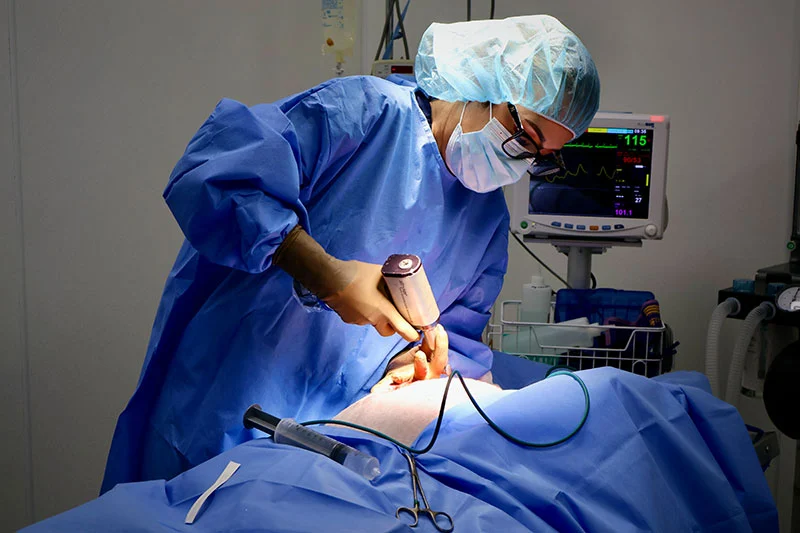
Once your pet is safely anesthetized and monitored, the collection site, usually at the back of the neck or lower back, is clipped and sterilely prepared. A fine needle is carefully placed into the space surrounding the spinal cord, and a small volume of fluid is collected. The sample is then submitted for analysis, which may include cell counts, protein levels, cytology and infectious disease testing. Your pet is monitored closely through recovery from anesthesia.
When performed safely, a CSF tap can be an important tool in diagnosing and managing complex neurologic diseases in pets. It is one of many advanced procedures offered through our veterinary internal medicine service.
CSF Tap FAQs
Why does my pet need a CSF tap?
A CSF tap is recommended when your pet has signs of brain or spinal cord disease, such as seizures, neck pain, weakness or loss of coordination. Testing the fluid around the brain and spinal cord can help identify inflammation, infection or certain cancers that other tests cannot detect.
Is my pet asleep during a CSF tap?
Yes. A CSF tap is always performed under general anesthesia. This keeps your pet still and comfortable and allows the specialist to collect the sample safely.
Why is imaging recommended before a CSF tap?
Advanced imaging, such as MRI or CT, can show swelling or increased pressure around the brain. In those situations, collecting fluid could carry added risk, so imaging first helps determine whether the procedure is safe and gives a more complete picture of the problem.
What are the risks of a CSF tap?
The risk of complications is small, but it is not zero. Risks include those associated with anesthesia and, rarely, complications related to pressure changes around the brain or the needle placement. Our specialist will review these risks with you and your veterinarian before moving forward.
What can CSF analysis show?
CSF testing can reveal changes in cell types and protein levels and can include infectious disease testing. These findings can help diagnose inflammatory conditions such as meningitis or encephalitis, infections and some cancers affecting the nervous system.
How long does recovery take?
Most pets recover from the procedure much like any short anesthetic event. Your pet will be monitored as they wake up, and you will receive instructions on how to watch for any changes once they are home.
How do I get a referral for a CSF tap?
West Texas Veterinary Specialist works on a referral basis with your family veterinarian. Ask your veterinarian about a referral, or they can visit our page on referring a patient. You can also call us at with questions.
Get Answers About Your Pet’s Neurologic Signs
If your pet is showing signs of brain or spinal cord disease, talk with your family veterinarian about a referral to West Texas Veterinary Specialist. Have questions about how specialty care works? Visit our Frequently Asked Questions for information on referrals, scheduling and what to expect, or call .