
Answers From Inside the Abdomen Through Tiny Incisions
Some abdominal problems can’t be fully explained by bloodwork, X-rays or ultrasound. At West Texas Veterinary Specialist in Lubbock, TX, our specialists use laparoscopy to look directly at the organs, take targeted biopsies and perform select procedures through a few small incisions. Compared with open surgery, pets usually have less pain and a quicker return home. We see laparoscopy patients by referral from their primary care veterinarian.
Book OnlineWhat Is Veterinary Laparoscopy?
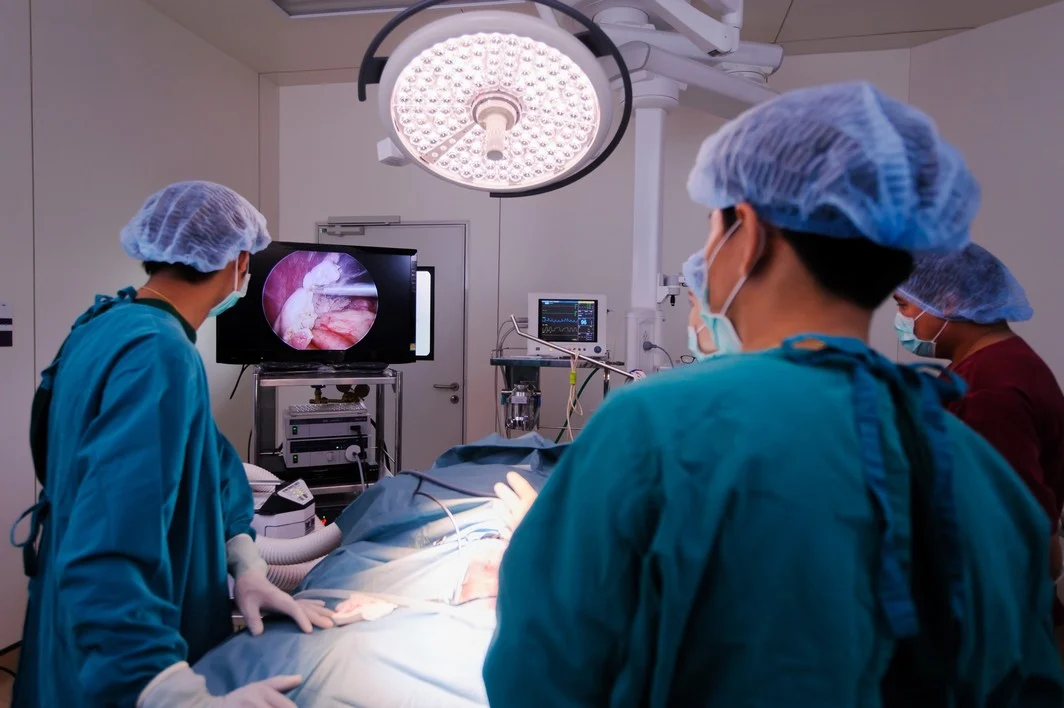
Laparoscopy is a minimally invasive approach to the abdomen. Your pet is placed under general anesthesia. A small camera, called a laparoscope, goes in through a short incision, and the abdomen is gently filled with carbon dioxide so the organs can be seen clearly. The camera sends a magnified, high-definition image to a monitor. Specialized instruments are then passed through one or two more small ports to examine tissue, collect samples or complete a procedure.
Traditional open abdominal surgery needs a long incision. Laparoscopy is usually done through a few openings that are often less than an inch long. That difference matters for your pet’s comfort and healing.
Why Your Veterinarian May Recommend Laparoscopy
Your primary care veterinarian may refer your pet for laparoscopy when earlier tests point to a problem inside the abdomen that needs a closer look or a tissue diagnosis. Depending on your pet’s needs, laparoscopy may be used for:
- Biopsies of the liver, pancreas, kidneys or lymph nodes
- Evaluating unexplained abdominal disease or abnormal imaging findings
- Investigating suspected masses or tumors and checking for spread
- Gallbladder and liver evaluation, including sampling for culture
- Selected surgical procedures that can be completed through small ports
Laparoscopy is often the next step after an abdominal ultrasound or other imaging identifies an area of concern. A biopsy taken under direct view can provide the definitive answer needed to build a treatment plan.
Benefits of a Minimally Invasive Approach
- Smaller incisions and less tissue trauma
- Less post-operative pain for most pets
- Shorter recovery and faster return to normal activity
- Magnified views that help with precise sampling
- Lower risk of incision complications than large open incisions
Specialty Care That Works With Your Veterinarian
West Texas Veterinary Specialist is a referral-based specialty practice. Your family veterinarian stays at the center of your pet’s care. Before laparoscopy, our team reviews your pet’s history, lab work and imaging, and may recommend more pre-anesthetic testing. After the procedure, we share findings, biopsy results and recommendations with both you and your veterinarian, so follow-up care continues smoothly close to home.
Laparoscopy is one part of our broader veterinary surgical procedures. If a case calls for an open approach for your pet’s safety or a complete result, we will talk through those options with you before moving forward.
What to Expect on Procedure Day
Most pets come in fasted on the morning of their procedure. Every patient has a physical exam and an anesthesia plan built around their age, size and health. Anesthesia and vital signs are monitored throughout the procedure. Many pets go home the same day or after a short observation period, with pain medication and simple incision-care instructions. Biopsy results usually come back from the laboratory within several days, and we will review them with you and your veterinarian.
Laparoscopy Questions From Pet Owners
What is veterinary laparoscopy?
Veterinary laparoscopy is a minimally invasive procedure. A small camera and specialized instruments are passed through tiny incisions to examine, sample or treat organs inside your pet’s abdomen while your pet is under general anesthesia.
Is laparoscopy safe for my pet?
Laparoscopy is safe for many dogs and cats, but whether it suits your pet depends on their overall health, size and condition. Our specialists review your pet’s history, lab work and imaging before recommending it, and anesthesia is closely monitored throughout.
How long does recovery take after laparoscopy?
Recovery is usually faster than after traditional open surgery. Many pets are moving comfortably within a day or two. Activity is typically restricted for about 10 to 14 days while the small incisions heal.
Will my pet need to stay overnight?
Many pets go home the same day after recovering from anesthesia. Some may need a short hospital stay for observation, depending on the procedure performed and how they recover.
Why choose laparoscopy over open surgery?
Laparoscopy uses much smaller incisions. For most pets that means less pain, less tissue trauma and a quicker recovery. The magnified camera view also helps our specialists choose precise biopsy sites.
Do I need a referral for laparoscopy?
Yes. West Texas Veterinary Specialist is a referral-based specialty practice. Ask your primary care veterinarian to refer your pet, and we will work with them on records, imaging and next steps.
When will I get biopsy results?
Tissue samples are sent to a veterinary pathology laboratory, and results usually return within several days. Our team will go over the findings and treatment recommendations with you and your veterinarian.
Get Clear Answers With Less Recovery Time
If your pet has an abdominal problem that needs a closer look, ask your veterinarian about a referral to West Texas Veterinary Specialist. Our specialists will work with your veterinarian to plan the safest, least invasive path to a diagnosis. Questions? Call us at .