
Helping Your Pet Breathe Easier, Fast
When fluid or air builds up around the lungs, every breath becomes work for your dog or cat. At West Texas Veterinary Specialist in Lubbock, our board-certified internal medicine specialist performs ultrasound-guided thoracocentesis, a minimally invasive procedure that removes that fluid or air, relieves pressure on the lungs and collects samples that help explain why it happened in the first place.
Book OnlineWhat Is Thoracocentesis?
Thoracocentesis is a chest tap. A needle or small catheter is placed through the chest wall into the pleural space, the thin area between the lungs and the inside of the chest, to draw out fluid (pleural effusion) or air (pneumothorax). It serves two purposes at once: it gives a struggling pet immediate relief, and it provides a sample for laboratory testing so we can identify the underlying cause.
Signs Your Pet May Need a Chest Tap
Pets with fluid or air in the chest often show:
- Fast, shallow or labored breathing, even at rest
- Open-mouth breathing, which is especially concerning in cats
- Reluctance to lie down, or sitting with elbows spread to breathe
- Coughing, weakness or tiring quickly with activity
- Pale or bluish gums
- Muffled heart or lung sounds noted by your family veterinarian
Fluid or air may also be found on chest X-rays or an ultrasound taken at your regular veterinary clinic, which often prompts a referral to our team.
Common Causes of Fluid or Air in the Chest
The fluid we remove can point to many different conditions, including congestive heart failure, infection (pyothorax), chylothorax, cancer, bleeding from trauma or rodenticide exposure, inflammatory disease and, in cats, feline infectious peritonitis. Air in the chest usually follows trauma or a ruptured area of lung tissue. Because the treatment for each of these is very different, analyzing the sample is a key step in your pet’s care.
What to Expect During the Procedure
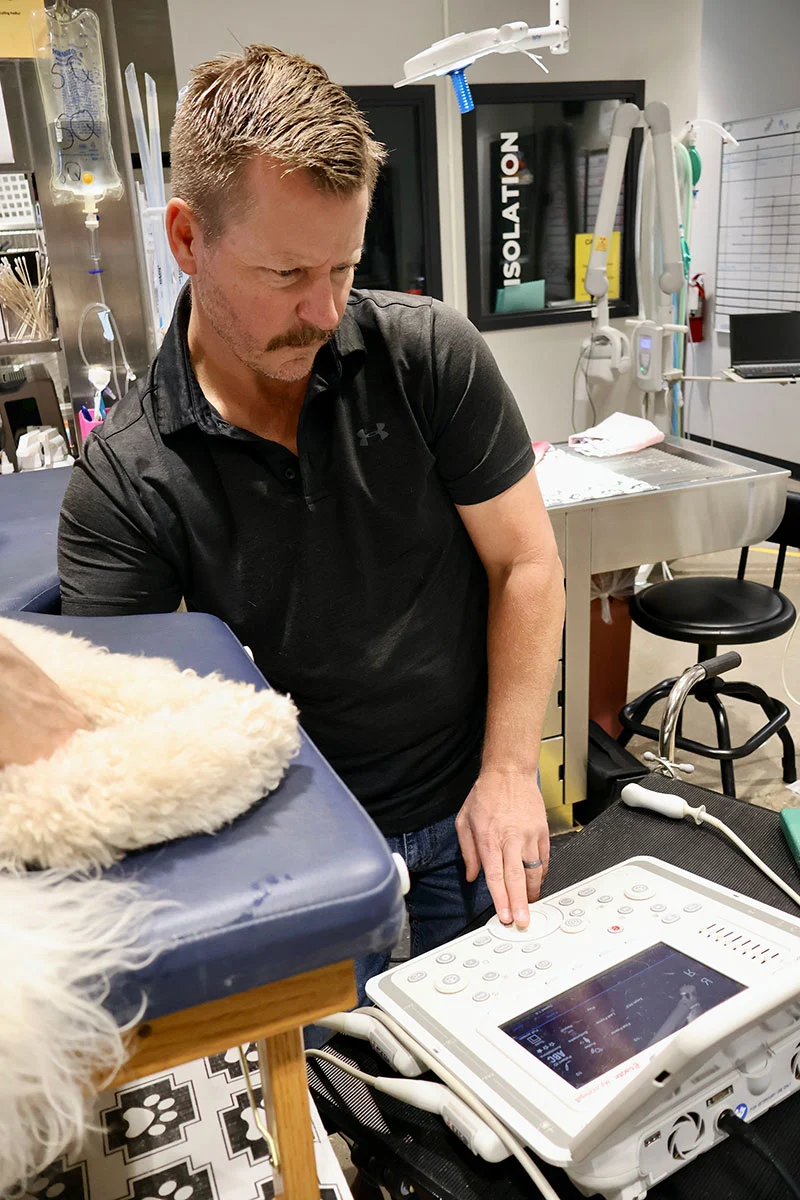
Your pet is gently positioned and kept calm and comfortable. Sedation is often, but not always, used depending on how your pet is breathing and their overall condition. Supplemental oxygen may be given before and during the procedure. Using real-time ultrasound, our specialist locates the safest spot to place the needle or catheter, avoiding the heart, lungs and blood vessels. Fluid or air is then removed slowly and carefully while your pet is monitored. Most dogs and cats tolerate thoracocentesis very well, and the procedure itself usually takes only a short time.
After Thoracocentesis
Most pets breathe noticeably easier as soon as the fluid or air is removed. Samples are submitted for laboratory testing, which may include cell counts, protein levels, cytology and bacterial culture. Additional diagnostics, such as an echocardiogram to evaluate the heart, are often recommended to confirm the cause. We share results and recommendations with you and your family veterinarian so the next steps in treatment are clear.
Some conditions cause fluid to return. If that happens, repeat thoracocentesis or other management options can be discussed based on your pet’s diagnosis.
Thoracocentesis Questions From Pet Owners
Is thoracocentesis painful for my pet?
Most pets tolerate it well. A small area of the chest is clipped and cleaned, local anesthetic and light sedation may be used, and the needle is guided by ultrasound for accuracy. Many pets seem more comfortable right away because breathing becomes easier.
How quickly will my pet feel better?
Pets with a large amount of fluid or air around the lungs often show improved breathing within minutes of the procedure. Long-term comfort depends on treating the underlying cause identified by testing.
What are the risks of a chest tap?
Complications are uncommon. Possible risks include bleeding, a small puncture of the lung causing air leakage, or infection. Ultrasound guidance and careful monitoring help keep these risks low.
Will the fluid come back?
It depends on the cause. Fluid from heart failure may be controlled with medication, while some cancers, chylothorax or infections can lead to recurring fluid. Your specialist will explain what to watch for and what follow-up care is recommended.
What does the fluid analysis tell you?
Testing the fluid helps classify it and identify cells, bacteria or other clues. This can point toward heart disease, infection, cancer, bleeding, chylothorax or inflammatory conditions, guiding the right treatment plan.
Can cats have thoracocentesis?
Yes. Cats are commonly affected by fluid in the chest, often from heart disease, infection or cancer. Thoracocentesis is a safe and very helpful procedure for both cats and dogs.
Do I need a referral for thoracocentesis in Lubbock?
West Texas Veterinary Specialists works closely with family veterinarians across the region. Talk with your regular veterinarian about a referral so your pet’s history and imaging can be shared with our internal medicine specialist.
Specialist Care When Breathing Is a Struggle
If your pet has been diagnosed with fluid or air in the chest, our Lubbock team is ready to help them breathe more comfortably and find answers. Ask your family veterinarian about a referral, call , or visit our Frequently Asked Questions to learn how referrals, scheduling and specialty visits work.