
Relieving Pressure on Your Pet’s Heart
Fluid around the heart can turn a stable pet into an emergency within hours. Pericardiocentesis removes that fluid so the heart can fill and pump normally again. At West Texas Veterinary Specialist in Lubbock, TX, a board-certified veterinary internal medicine specialist performs the procedure with real-time ultrasound guidance. The specialist also works to find the cause of the fluid, so you and your family veterinarian can plan what comes next.
Book OnlineWhat Is Pericardiocentesis?
The heart sits inside a thin sac called the pericardium. Normally this sac holds only a small amount of lubricating fluid. When blood, inflammatory fluid or other fluid collects there, the condition is called pericardial effusion. If enough fluid builds up, it squeezes the heart and keeps the chambers from filling properly. This pressure is called cardiac tamponade, and it can quickly become life-threatening.
Pericardiocentesis is a procedure in which a needle or small catheter is passed through the chest wall into the pericardial sac to drain this fluid. Removing even a modest amount often brings immediate relief. Blood pressure improves, breathing becomes easier and many pets look noticeably brighter within minutes.
Signs Your Pet May Have Fluid Around the Heart
Pericardial effusion is far more common in dogs than in cats. It is seen most often in medium and large breed dogs, such as golden retrievers, German shepherds and Labrador retrievers. Common signs include:
- Sudden weakness, collapse or fainting
- Pale gums
- Rapid or labored breathing
- Exercise intolerance or lethargy
- A swollen, fluid-filled abdomen
- Reduced appetite
- Muffled heart sounds or a weak pulse found by your veterinarian
If your pet collapses or is struggling to breathe, contact your family veterinarian or the nearest emergency hospital right away.
Common Causes of Pericardial Effusion
- Heart tumors, including hemangiosarcoma of the right atrium and heart base tumors such as chemodectoma
- Idiopathic pericardial effusion, where bleeding into the sac occurs without an identifiable cause
- Clotting disorders, including those caused by anticoagulant rodenticide (rat poison) exposure
- Infection or inflammation of the pericardium (less common)
- Congestive heart failure, which is the more typical cause in cats
Finding the cause guides every decision that follows. When a tumor is suspected, our team can coordinate with our veterinary oncology service to review treatment options with you.
How the Procedure Is Performed
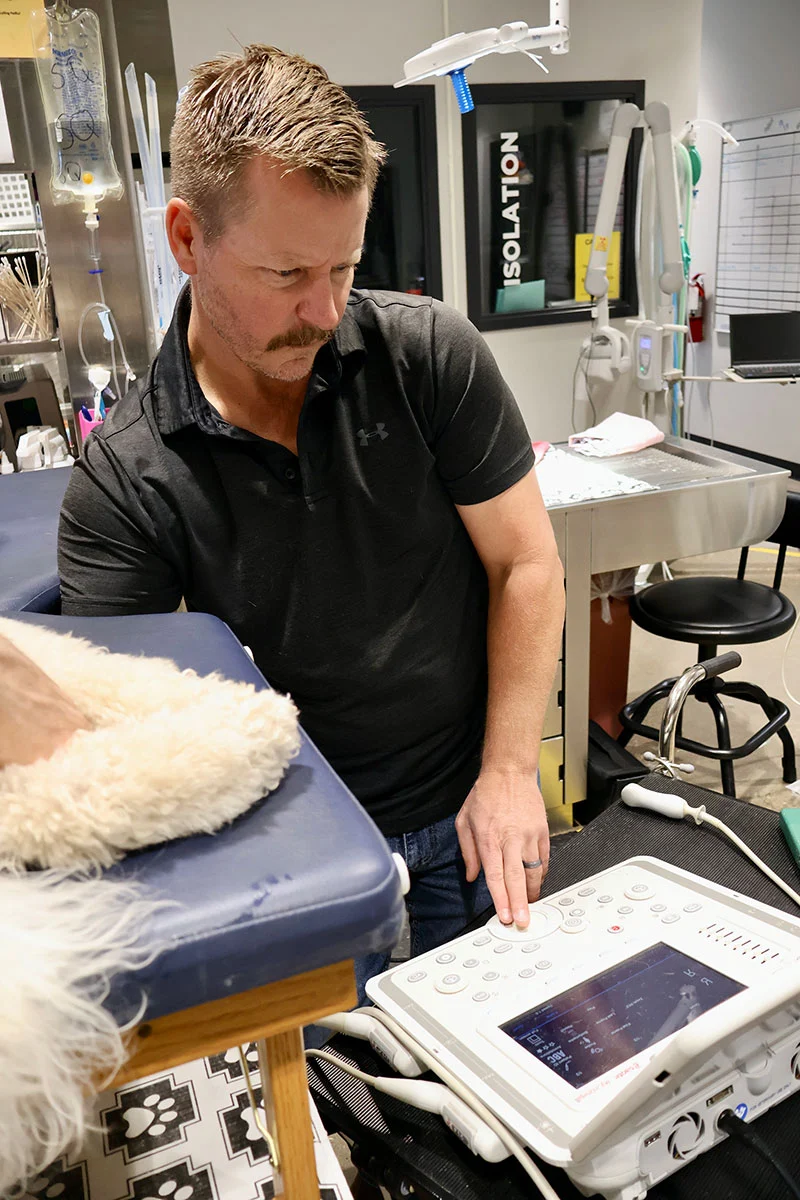
Most pets need only light sedation and a local anesthetic at the needle site. Many are already too weak for general anesthesia. Your pet is positioned comfortably, and a small area on the right side of the chest is clipped and prepared with surgical scrub. Using ultrasound to see the heart and the fluid in real time, the specialist guides the needle or catheter into the pericardial sac. The fluid is then drained slowly.
Throughout the procedure, your pet’s heart rhythm is watched closely, because the heart can become irritable when it is touched. Ultrasound guidance helps the specialist avoid the heart, lungs and major blood vessels. Most procedures take less than an hour from preparation to recovery.
After Pericardiocentesis
Samples of the collected fluid are analyzed to look for bleeding, infection, inflammation or abnormal cells. Once the fluid is removed, the heart can be seen more clearly. For this reason, an echocardiogram after drainage is often the best chance to identify a mass on the heart.
Pets are monitored after the procedure for changes in heart rhythm, breathing and recurrence of fluid. Some pets need only one drainage. Others, particularly those with tumors, may develop fluid again. If that happens, your specialist will talk with you about repeat drainage, surgery or other options. If fluid has also collected around the lungs, thoracocentesis may be performed during the same visit.
Why a Specialist Performs This Procedure
Pericardiocentesis requires precise needle placement next to a beating heart, careful rhythm monitoring and the ability to interpret the ultrasound findings on the spot. Because of these risks, it is typically performed by a veterinary specialist or an experienced emergency and critical care veterinarian. At West Texas Veterinary Specialist, your pet’s procedure is performed by a board-certified internal medicine specialist. The specialist works closely with your family veterinarian, who receives a full report so your pet’s care stays coordinated. Veterinarians can learn how to request our internal medicine specialist. Pet owners can find answers about referrals and scheduling on our Frequently Asked Questions page.
Pericardiocentesis FAQs
Is pericardiocentesis painful for my pet?
Most pets tolerate the procedure well. A local anesthetic numbs the needle site, and light sedation keeps your pet calm and still. Many pets feel noticeably better right afterward because pressure on the heart is relieved.
How quickly will my pet improve after the fluid is removed?
Improvement is often seen within minutes. Breathing eases, gum color improves and pets with cardiac tamponade usually become stronger and more alert soon after drainage.
Will the fluid come back?
It depends on the cause. Some pets, including many with idiopathic pericardial effusion, need only one or two drainages. Pets with heart tumors are more likely to have recurring fluid, and your specialist will discuss longer-term options with you.
What are the risks of pericardiocentesis?
The most common risk is a temporary abnormal heart rhythm. Less common risks include bleeding or puncture of the lung or heart. Ultrasound guidance and continuous heart rhythm monitoring help keep these risks low.
Can cats have pericardiocentesis?
Yes, although pericardial effusion is less common in cats and is usually linked to heart failure. In cats, the fluid is often a small amount that improves with medical treatment. Drainage is reserved for cats whose heart function is affected.
Does my pet need a referral for pericardiocentesis?
Yes. West Texas Veterinary Specialist is a referral practice, so your family veterinarian will refer your pet and share medical records. Our specialist then works alongside your veterinarian throughout your pet’s care.
What tests may be recommended after the procedure?
The collected fluid is analyzed. An echocardiogram is often recommended to look for heart masses. Your specialist may also suggest bloodwork, clotting tests, chest radiographs or an abdominal ultrasound to check for related disease.