
A Clear Look at Your Pet’s Heart Without Surgery
Cardiac ultrasonography, also called echocardiography, is the gold standard for diagnosing heart disease in pets. At West Texas Veterinary Specialist in Lubbock, TX, our board-certified team performs echocardiograms that show your pet’s heart chambers, valves and walls as they work in real time. The results give your veterinarian the information needed to confirm a diagnosis and build a treatment plan.
Book OnlineWhat an Echocardiogram Shows
An echocardiogram uses sound waves to create moving images of the heart. Unlike X-rays, which show only the outline and size of the heart, an echocardiogram shows how the heart is built and how well it pumps. It is one of the advanced diagnostic tools offered through our veterinary internal medicine services.
With this exam, we can measure chamber size, wall thickness, valve motion and blood flow. That detail helps us identify and monitor:
- Valvular disease, such as mitral valve disease in small breed dogs
- Dilated cardiomyopathy, often seen in large breed dogs
- Hypertrophic cardiomyopathy in cats
- Congenital anomalies, or heart defects present at birth
- Cardiac and pericardial masses
- Fluid around the heart (pericardial effusion)
- Other acquired heart disorders
Signs Your Pet May Need a Heart Evaluation
Your family veterinarian may recommend an echocardiogram if your pet has a new or changing heart murmur, an irregular heart rhythm, coughing, fast or labored breathing, fainting, exercise intolerance or a swollen belly. Breeds known for inherited heart disease may also benefit from screening before signs appear, and cats with heart disease often show no outward signs until the disease is advanced.
A Gentle, Noninvasive Exam
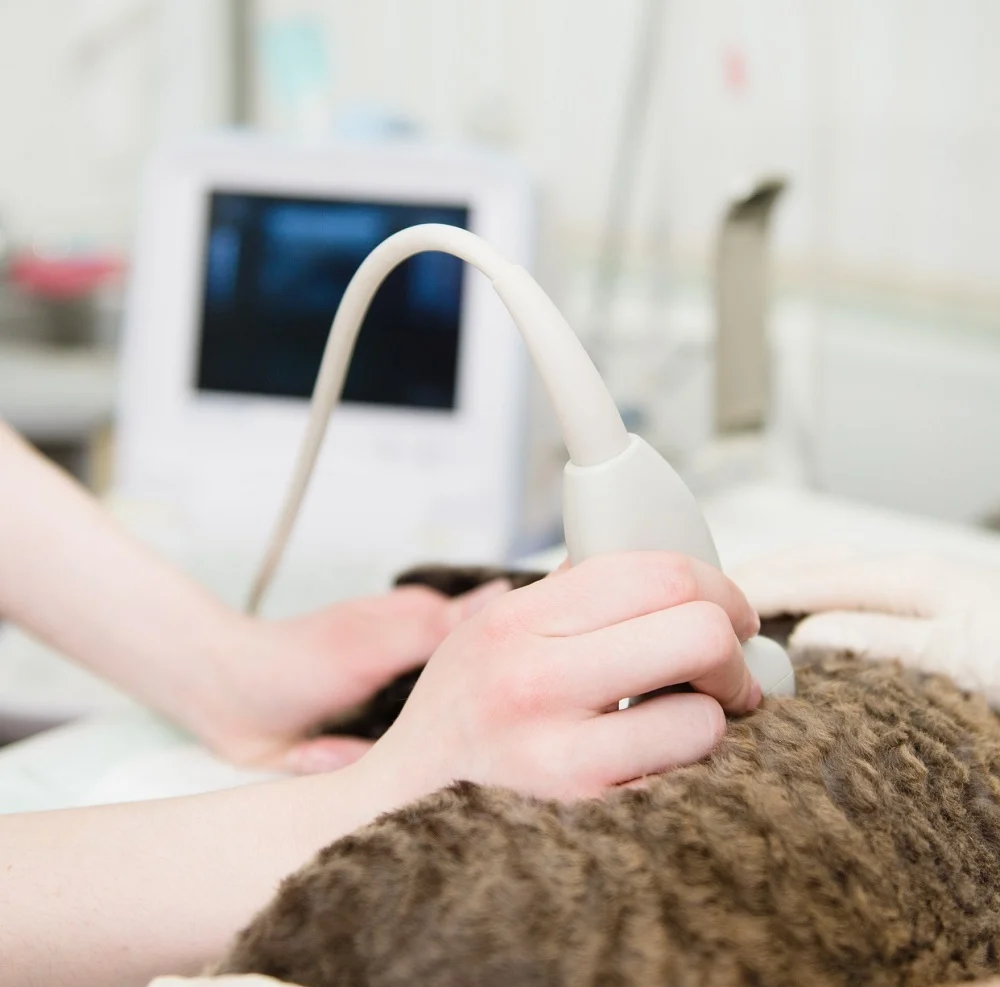
Most pets do not need sedation for an echocardiogram. Staying awake allows for a more accurate assessment of the heart’s natural rate, rhythm and contractility. Your pet lies on a padded table while a small probe is moved gently over the chest, usually through a small shaved area. The exam causes no pain, and most pets go home the same day with no recovery time.
Our specialists can perform these advanced heart evaluations in partnership with your veterinarian’s hospital, so your pet receives specialist-level care without long trips out of the region. When an echocardiogram is paired with a 6-lead ECG, we can also review the heart’s electrical rhythm for a more complete picture.
Working With Your Veterinarian and Cardiologists
After the exam, we share our findings and recommendations directly with your family veterinarian, who stays at the center of your pet’s care. In certain complex or unusual cases, your veterinarian may recommend referral to a board-certified veterinary cardiologist for more specialized evaluation. West Texas Veterinary Specialist also performs cardiac evaluations at the request of cardiologists whose patients cannot travel back to their facility on a regular basis.
Echocardiogram FAQs
What is the difference between an echocardiogram and a chest X-ray?
A chest X-ray shows the overall size and shape of the heart and the condition of the lungs. An echocardiogram shows the inside of the heart in motion, including the valves, chamber walls and blood flow, which allows a more specific diagnosis.
Does my pet need to be sedated for an echocardiogram?
Most pets do not need sedation. Keeping your pet awake gives a more accurate view of the heart’s natural rate, rhythm and pumping strength. Light sedation may be considered only for very anxious pets when it is safe to do so.
Is an echocardiogram painful for my dog or cat?
No. The exam is noninvasive. A small area of fur on the chest is usually shaved, gel is applied and a probe is moved gently over the skin. Most pets tolerate it well while lying calmly on a padded table.
Why would my veterinarian recommend an echocardiogram?
Common reasons include a heart murmur, an abnormal rhythm, coughing, breathing changes, fainting, reduced energy or an enlarged heart seen on X-rays. It is also used to monitor known heart disease and to screen breeds at higher risk.
Which heart conditions can an echocardiogram detect?
It can identify mitral valve disease, dilated cardiomyopathy, hypertrophic cardiomyopathy in cats, congenital heart defects, cardiac and pericardial masses, fluid around the heart and other acquired heart disorders.
How do I get an echocardiogram for my pet in Lubbock?
Echocardiograms are arranged through a referral from your family veterinarian. Ask your veterinarian to request an evaluation with West Texas Veterinary Specialists, and our team will coordinate the details.
Will my regular veterinarian receive the results?
Yes. We send our findings and recommendations to your family veterinarian so they can guide your pet’s ongoing treatment, and we remain available to consult as your pet’s care continues.
Get Answers About Your Pet’s Heart Health
If your pet has a murmur, breathing changes or a known heart condition, ask your family veterinarian about a referral to West Texas Veterinary Specialist. Veterinarians can refer a patient directly, and pet owners can find answers about scheduling and specialty care on our Frequently Asked Questions page. Call with any questions.